If you're waiting on a green card, holding an H-1B, or filing cases for others, the Federal Register has been busy since August. Some of what's been reported as "new rules" is in force, some is only proposed, and one piece is blocked by a court. Here's each action, read from the Federal Register and the agencies' own pages on October 16, 2026, sorted by what it actually does today.
The short version
In force: an H-1B extension fee change, mandatory e-filing as USCIS designates forms, and the end of automatic EAD extensions for renewals. Proposed only: the $103,265 H-1B fee, removing the 60-day grace period, the OPT fees, and removing deference on extensions. Blocked: collecting the $100,000 H-1B payment.
In force
| Published | Action | What it does | In force since |
|---|---|---|---|
| Aug 10, 2026 | DHS final rule, 9-11 Biometric Fee (91 FR 51360) | Covered employers, those with 50 or more US employees and more than half of them on H-1B or L-1, pay the fee on every extension petition, same employer included. For an H-1B the fee is $4,000. | Sep 9, 2026 |
| Aug 11, 2026 | DHS interim final rule, mandatory e-filing (91 FR 51924) | Lets USCIS require online filing for any form it has offered online for at least 180 days, after notice on its website and a 60-day grace period | Aug 11, 2026 |
| Oct 14, 2026 | DHS final rule, no automatic EAD extensions (91 FR 65306) | Finalizes the October 30, 2025 interim rule: EAD renewals filed on or after October 30, 2025 get no automatic extension while they're pending (8 CFR 274a.13(e)) | Oct 14, 2026 |
The EAD change matters most to people with a pending I-485 and H-4 spouses: a renewal that isn't approved before the old card's end date leaves a gap. The EAD extension calculator works out which rule applies to a given card.
One more takes effect later and applies to investors only: the EB-5 fee rule (91 FR 61940), effective November 30, 2026.
Proposed, with the comment deadline
| Published | Proposal | What it would do | Comments |
|---|---|---|---|
| Aug 25, 2026 | Fee for certain H-1B petitions (91 FR 54817) | A $103,265 fee on every cap-subject H-1B petition, advanced-degree cases included | Closed Sep 24, 2026; no final rule yet |
| Sep 11, 2026 | Eliminating the 60-day grace period (91 FR 57807) | Remove 8 CFR 214.1(l)(2), the up-to-60-day grace period after a job ends, for H-1B, L-1, O-1, TN, E and H-1B1 workers and their dependents | Open until Nov 10, 2026 |
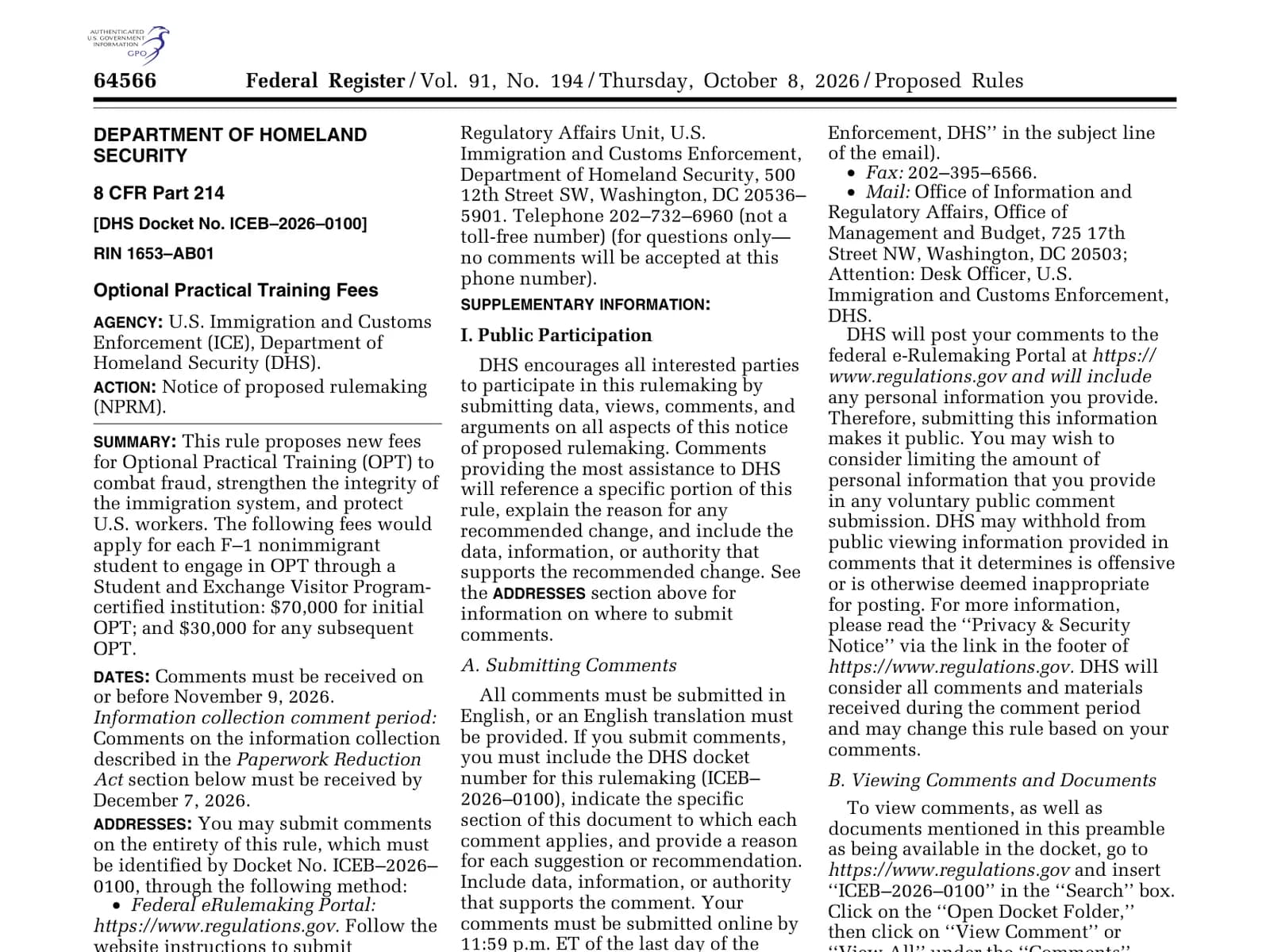
| Oct 8, 2026 | OPT fees (91 FR 64566) | $70,000 for a student's first OPT and $30,000 for any later OPT, paid by the school | Open until Nov 9, 2026 |
| Oct 14, 2026 | Removing deference to prior approvals (91 FR 65119) | Remove 8 CFR 214.1(c)(5), so USCIS would no longer defer to an earlier approval on the same facts when deciding an extension | Open until Nov 13, 2026 |
None of these change anything until a final rule is published. The grace period still applies today: under 8 CFR 214.1(l)(2), status lasts up to 60 consecutive days after a job ends, or until the authorized period ends if that's sooner. The OPT fee proposal walks through that one in detail.
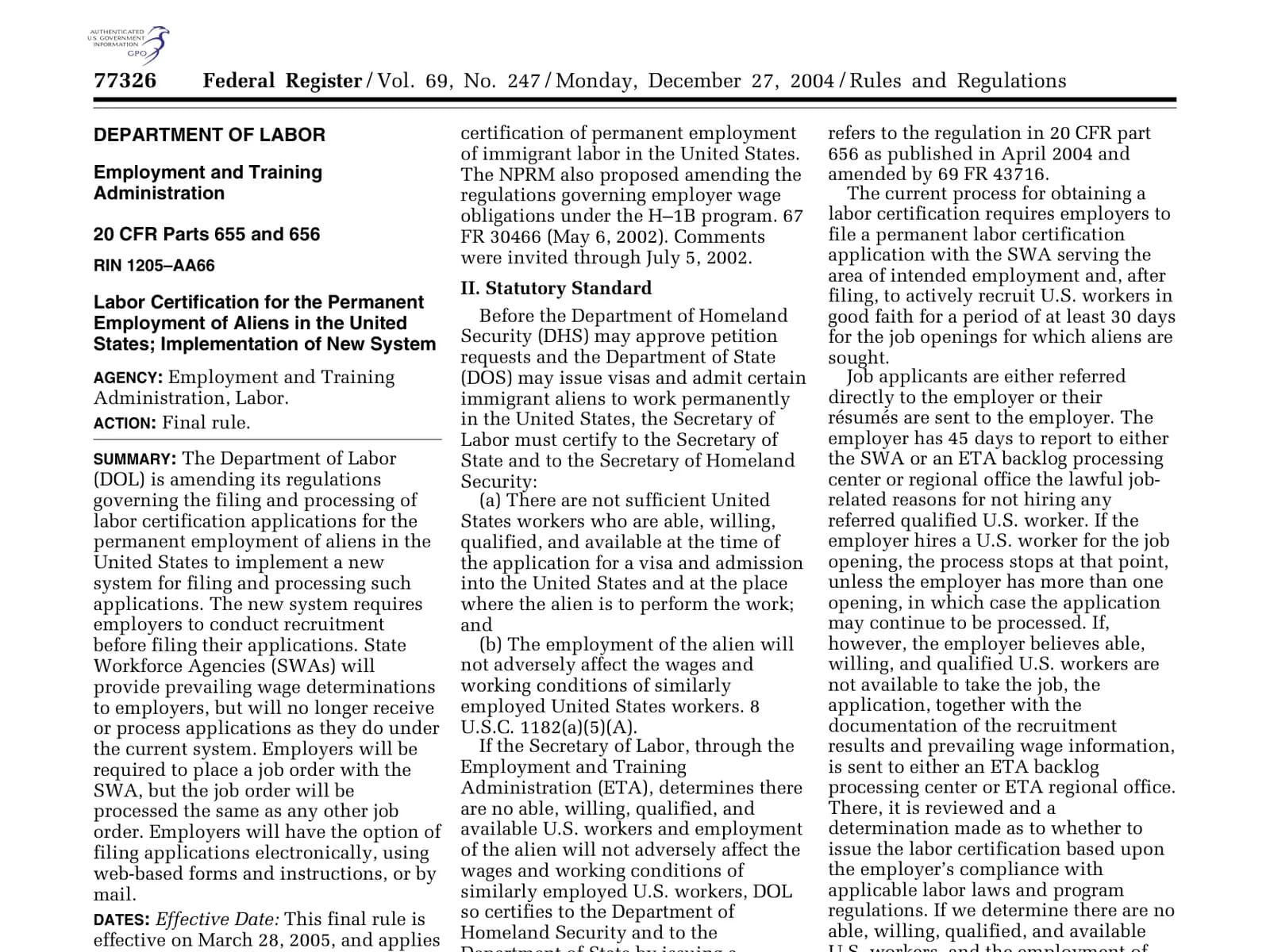
Still open from earlier in the year: DOL's proposal to raise the four prevailing wage levels for PERM and LCAs (91 FR 15454, March 27, 2026). Its comments closed May 26, 2026, and no final rule had been published by October 16. The four wage levels explains what it would move.
Blocked
The $100,000 H-1B payment. Proclamation 11069, signed September 18 and published September 23, 2026, extends the September 2025 restriction for another 12 months, to September 21, 2027. USCIS's own alert says a federal court in Massachusetts vacated its guidance for collecting the payment on June 8, 2026, the First Circuit refused to pause that order on July 24, and DHS "will comply with the court's order while DHS considers next steps."
Directions to the agencies
Executive Order 14431, published September 23, 2026, tells State, Labor and Homeland Security to take into account, on any LCA, H-1B petition or visa, whether the employer laid off similar US workers in the previous year or plans to. It also told DOL's Wage and Hour Division to begin reviewing past LCA data within 30 days. It doesn't set a rule for how that's weighed, and no implementing rule has been published.
DOL's PERM holds
On October 8 and 9, 2026, DOL moved every pending PERM case of several large employers to APPLICATION ON HOLD, Microsoft's 598 and Capgemini's 169 among them. DOL hadn't published a notice about it in the Federal Register or on OFLC's announcements page as of October 16. Its regulations do allow DOL to suspend processing for an employer under investigation, for up to 180 days at first (20 CFR 656.31(b)), but DOL hasn't said in writing which rule it's using. Employers under review counts the held cases every day.
Where to follow it
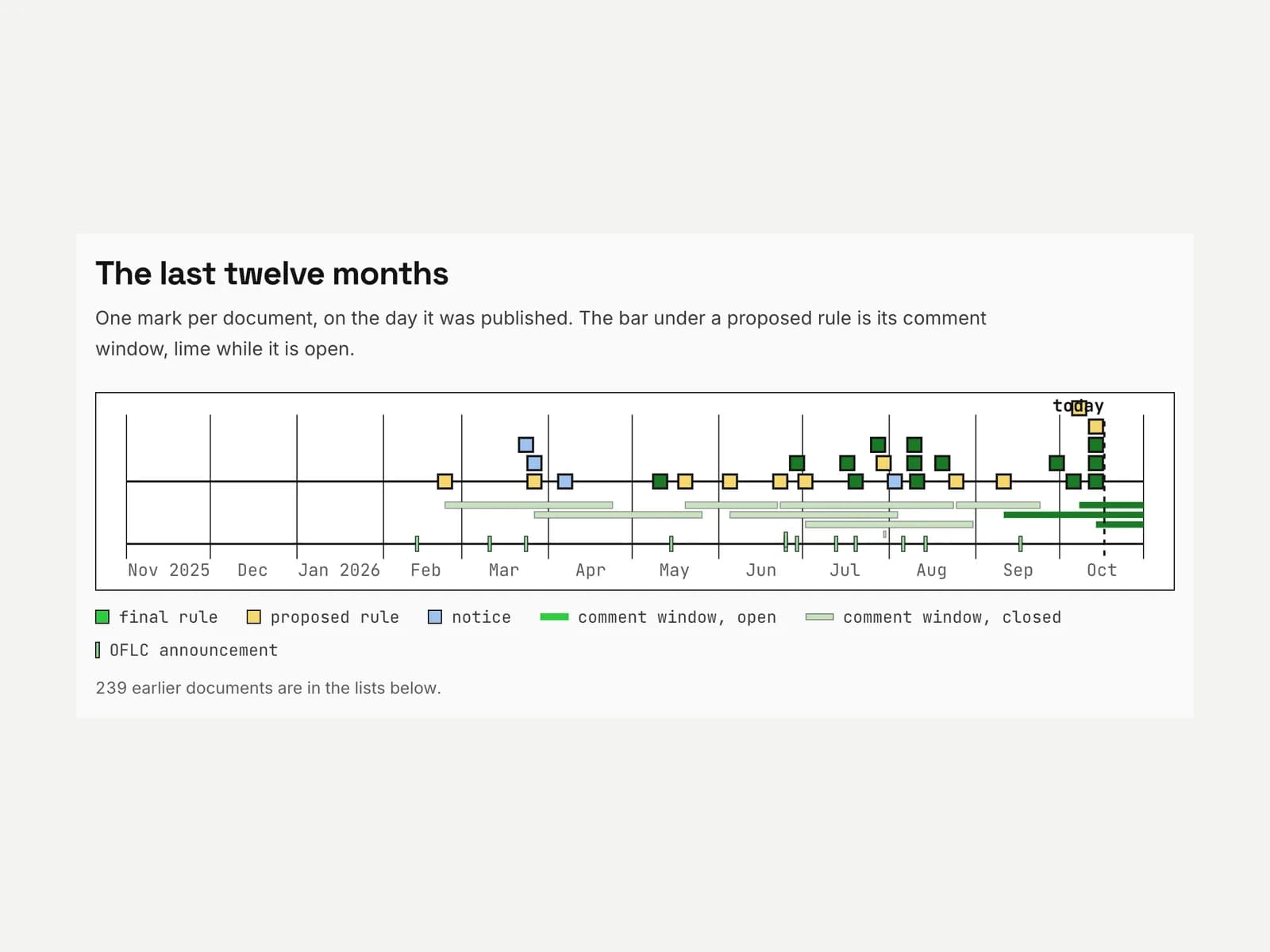
Every rule and proposal on these programs is on policy changes, with the comment windows and effective dates on one timeline. The weekly digest on this site names new Federal Register documents as they're published. None of this is legal advice; your attorney can say what applies to your case.