If you're an F-1 student counting on OPT, or an employer that hires students on it, you've probably seen the $70,000 figure. It comes from a proposed rule published in the Federal Register on October 8, 2026, and nothing it proposes is in force. Here's what the document itself says, read on October 16, 2026.
Proposed, not in force
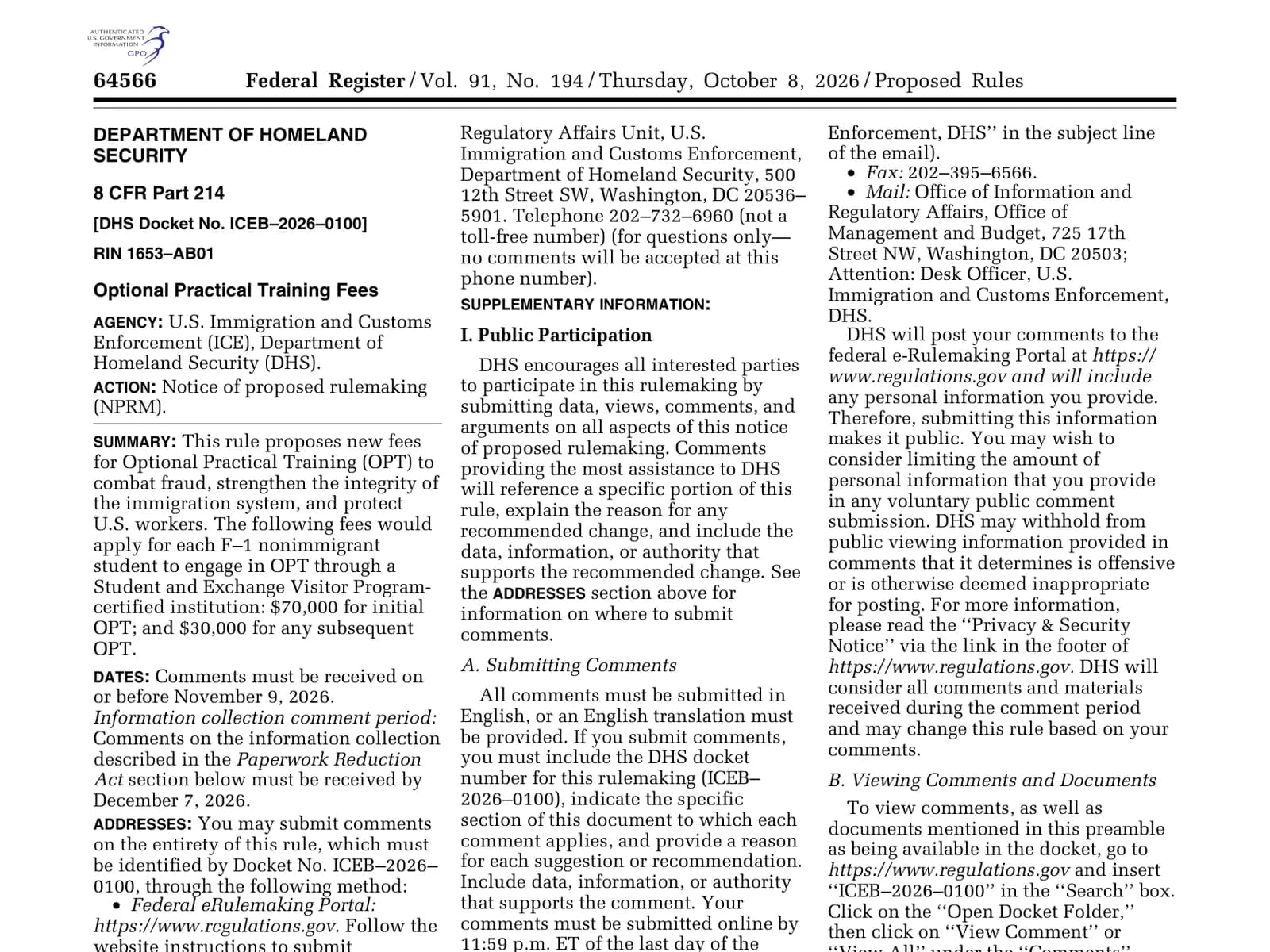
FR doc 2026-20660, "Optional Practical Training Fees" (91 FR 64566), from ICE for DHS. Comments close November 9, 2026. Until a final rule is published, the current OPT rules apply.
The figures
| What | The proposal |
|---|---|
| A student's first OPT, of any type | $70,000, one time |
| Any later OPT, STEM OPT extension included | $30,000 each time |
| Who pays | The SEVP-certified school, before its official enters the OPT recommendation |
| CPT | Not covered: the rule addresses OPT only |
| Refunds | A school may ask for one if the student never receives the OPT work permit; none once it's issued |
| When it would start | 60 days after a final rule is published, for OPT recommendations dated on or after that day |
The fee is tied to the school's recommendation, and the proposal says plainly that it isn't tied to any particular employer. A student who does pre-completion OPT and then post-completion OPT would cost the school $70,000 for the first and $30,000 for the second, whether or not the employer changed.
Who would actually pay
The proposal puts the payment on schools. DHS then notes that schools "may mitigate their budgetary impact by passing the financial obligation of this proposed fee onto F-1 nonimmigrant students, all students, or employers." It also says a school's official isn't required to recommend any student for OPT, and could decline to pay for one.
So the cost could land on the school, the student or the employer, and the document doesn't decide which. DHS estimated the fees collected each year at $8.4 billion to $16.5 billion, with $12.4 billion as its primary estimate, and counted separately what would be lost if schools don't pay and fewer students take OPT.
Who's on OPT now
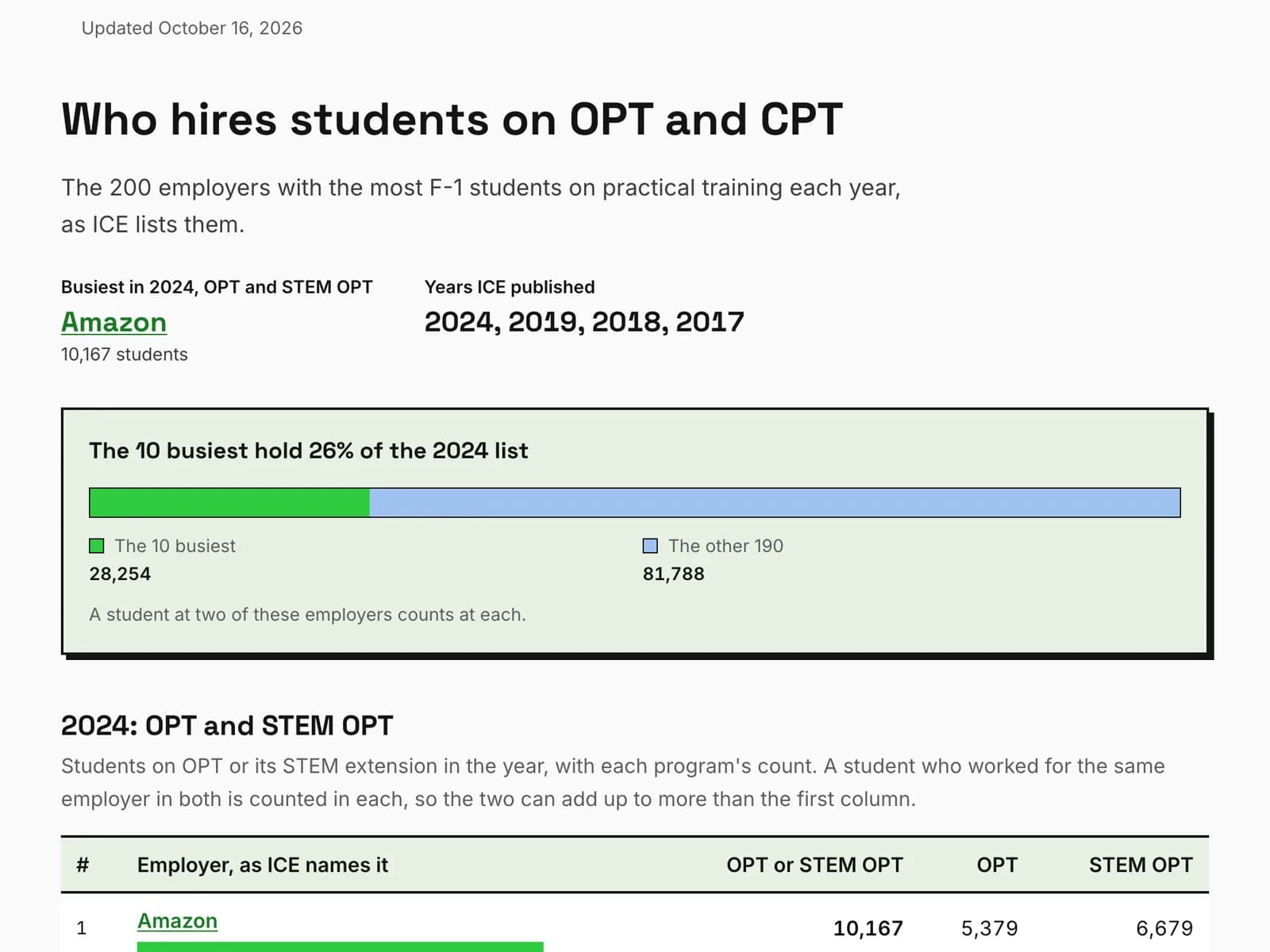
DHS cites its own 2024 figures: 194,554 F-1 students were granted work permits for pre-completion or post-completion OPT and reported working that year, and 165,524 were on STEM OPT. ICE's list of the employers with the largest OPT counts, from the same 2024 release, is on OPT and CPT employers. Amazon led it, with 10,167 students on OPT or STEM OPT.
What it would and wouldn't touch
- Students already on OPT. DHS proposes applying the rule only to students who haven't received a recommendation before the effective date, and not to students "who are engaging in OPT or have received a DSO recommendation for OPT that was issued prior to the effective date of the final rule."
- A STEM extension later. The $30,000 fee applies to later OPT for a student whose first OPT fee was paid. The passages read for this post don't spell out a STEM extension for someone whose first OPT predates the rule; that's a question to raise in a comment.
- H-1B and green card cases. The proposal is about OPT. It doesn't change H-1B petitions or PERM, though OPT is how many graduates reach either one.
The dates
| Date | What happens |
|---|---|
| October 8, 2026 | Proposal published |
| November 9, 2026 | Comments on the rule close |
| December 7, 2026 | Comments on its paperwork burden close |
| Not yet | A final rule, which DHS would publish after reading the comments, and which can differ from the proposal |
| 60 days after a final rule | The proposed start, for OPT recommendations dated that day or later |
A proposal can change between draft and final, or never become final. Until a final rule appears in the Federal Register, plan around the rules in force today.
How to comment
Comments go through regulations.gov under docket ICEB-2026-0100, by November 9, 2026. DHS says it won't treat anything sent another way, emails and letters included, as a comment. Regulations.gov showed 2,508 comments posted on the evening of October 16.
Where to follow it
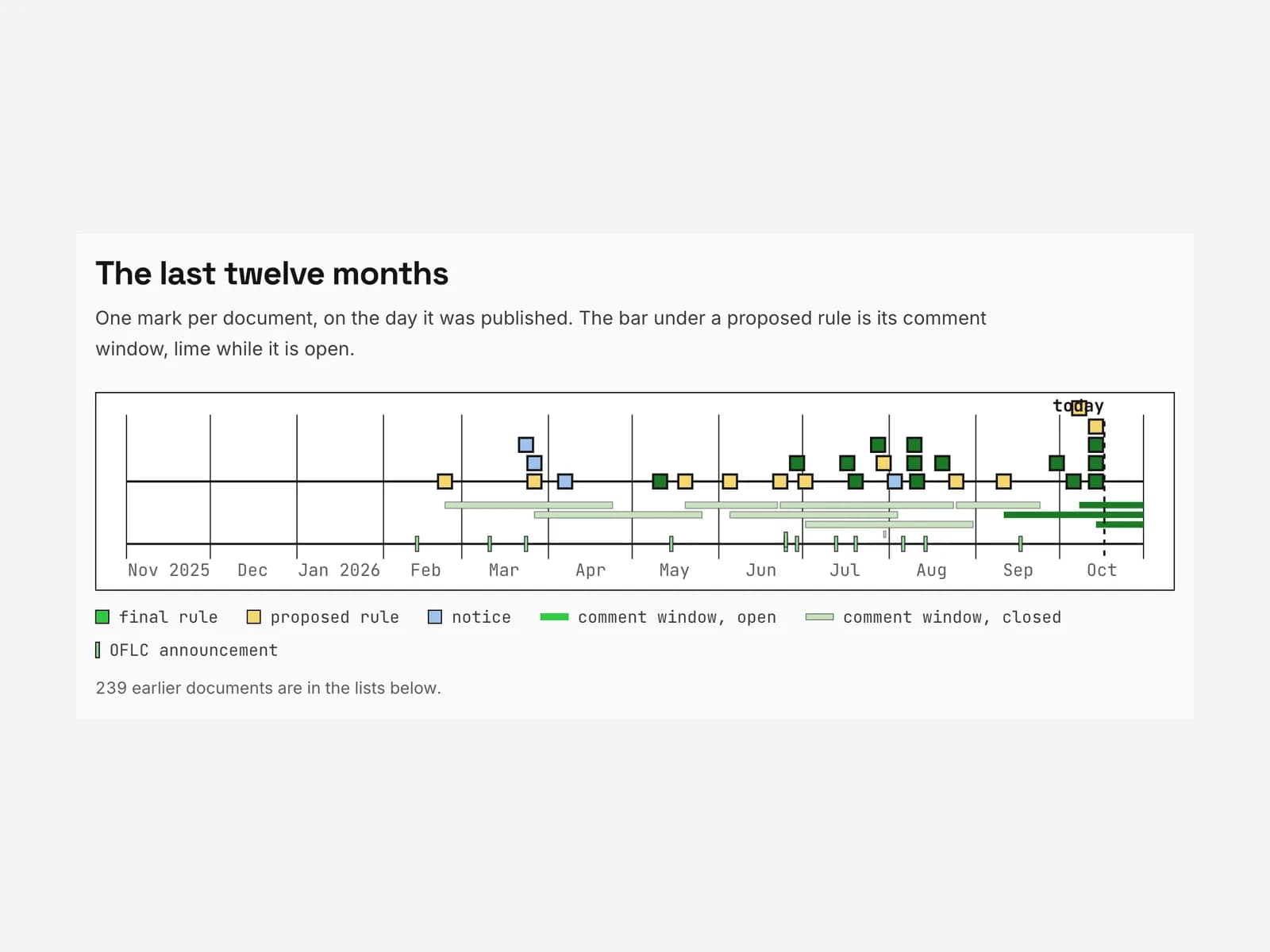
Policy changes carries the proposal with its comment window, and will show a final rule if one is published. For what the record shows about employers that hire students on OPT and also file PERM, see OPT employers that also file PERM. Nothing here is legal advice; a school's international office or an attorney can say what applies to you.