Somebody told you your PERM was filed. Maybe they said the wage request went in, or that the I-140 is approved and now you wait. If none of that means much yet, this is the whole thing laid out in order, with what each step takes right now and how to check yours without asking anyone.
This is written for the person waiting, not the lawyer. Nothing here is legal advice, and your attorney knows your case in a way a public dataset never will.
The shape of it
An employer-sponsored green card is a sequence of separate filings with two different agencies. Each one has to finish before the next begins, each has its own number, and each has its own queue.
| Step | Agency | What it is | Roughly how long |
|---|---|---|---|
| Prevailing wage determination | Labor | DOL sets the minimum salary for the job | 3 to 5 months |
| Recruitment | none | The employer advertises the job | 2 to 4 months |
| PERM (ETA-9089) | Labor | DOL certifies no US worker was available | about 11 months |
| I-140 | USCIS | The employer petitions for you | months, or 15 days with premium processing |
| I-485 or consular | USCIS or State | You get the status | depends entirely on your priority date |
The last row is the one that varies most. For some people it's a few months. For others, the wait after I-140 approval is measured in years, and none of the earlier steps change that.
Step one: the prevailing wage determination
Before an employer can advertise the job, it has to ask the Department of Labor what the job pays. That request is Form ETA-9141, and DOL's answer sets the floor the employer must offer.
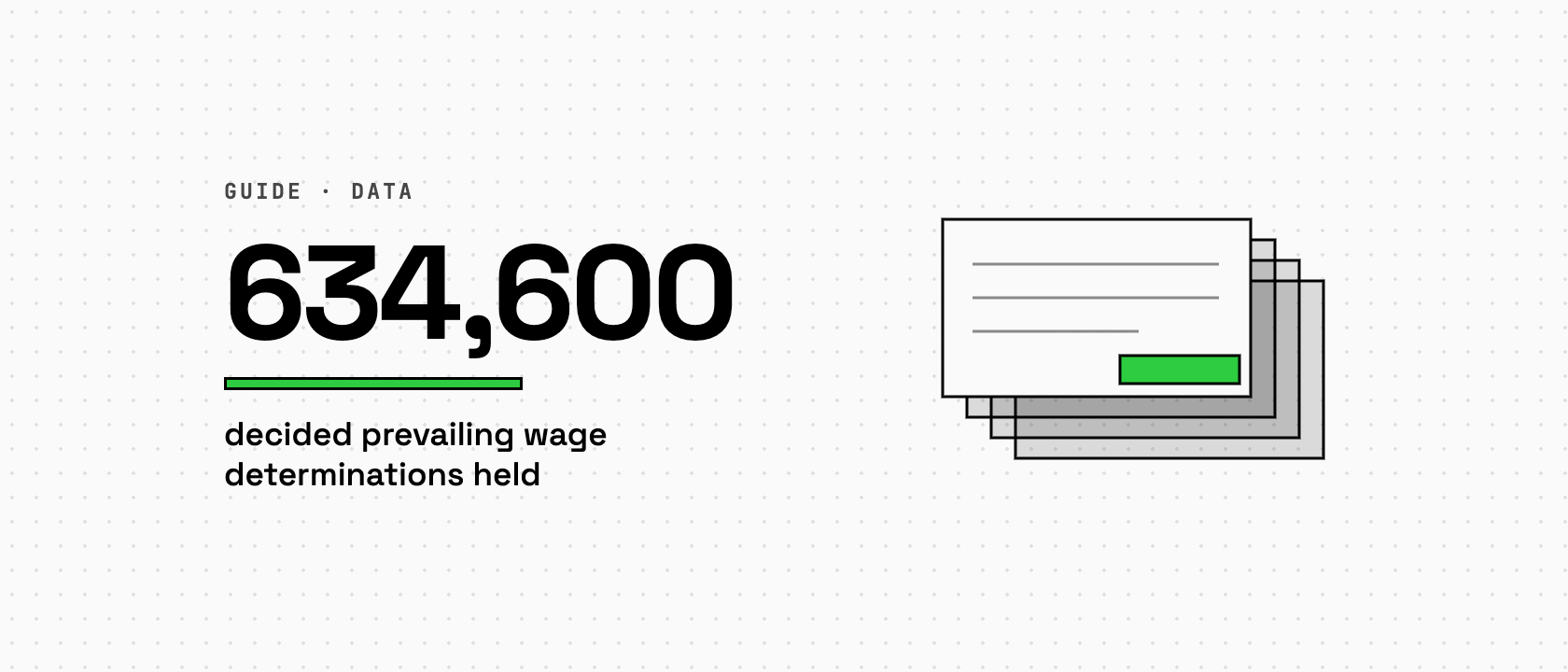
How long right now. DOL is working requests received in April 2026 for the standard queue, and March 2026 for requests using a different wage source. The average time to a determination is 336 days, about eleven months, though that average covers a long tail.
How to check yours. The request has its own case number, starting with P-100-. Paste it into case status and you get DOL's own status for it, pending or decided, plus the wage once it's issued. If you don't have the number, search the employer.
There's a persistent myth that pending wage requests can't be checked by the public. It isn't true, and it's worth knowing because it's repeated on a lot of immigration sites.
What can go wrong. DOL can come back with a wage higher than the employer expected, which sometimes sends the whole thing back to the drawing board. The employer can also ask DOL to reconsider, which adds months.
What to do. Very little, honestly. This step is entirely between the employer and DOL. See how DOL sets a prevailing wage if you want to understand the number when it arrives.
Step two: recruitment
The employer has to genuinely test the US labour market: newspaper ads, a job order with the state workforce agency, and several other steps, each with its own timing rule. There's a quiet period after the ads before the PERM can be filed, and a hard outer limit after which the ads go stale.
How long. Two to four months, mostly determined by the timing rules rather than by anyone's effort.
How to check. You can't, directly. Recruitment produces no public record. What you can do is understand the clocks, because they're what decides when the PERM can actually be filed. The deadline calculator works them out from the determination date.
What can go wrong. A missed window restarts the recruitment. This is the step where delays quietly happen, and it's the one your employer controls completely.
Step three: the PERM application
The employer files Form ETA-9089 and DOL decides whether to certify it. This is the step people mean when they say "my PERM is pending."
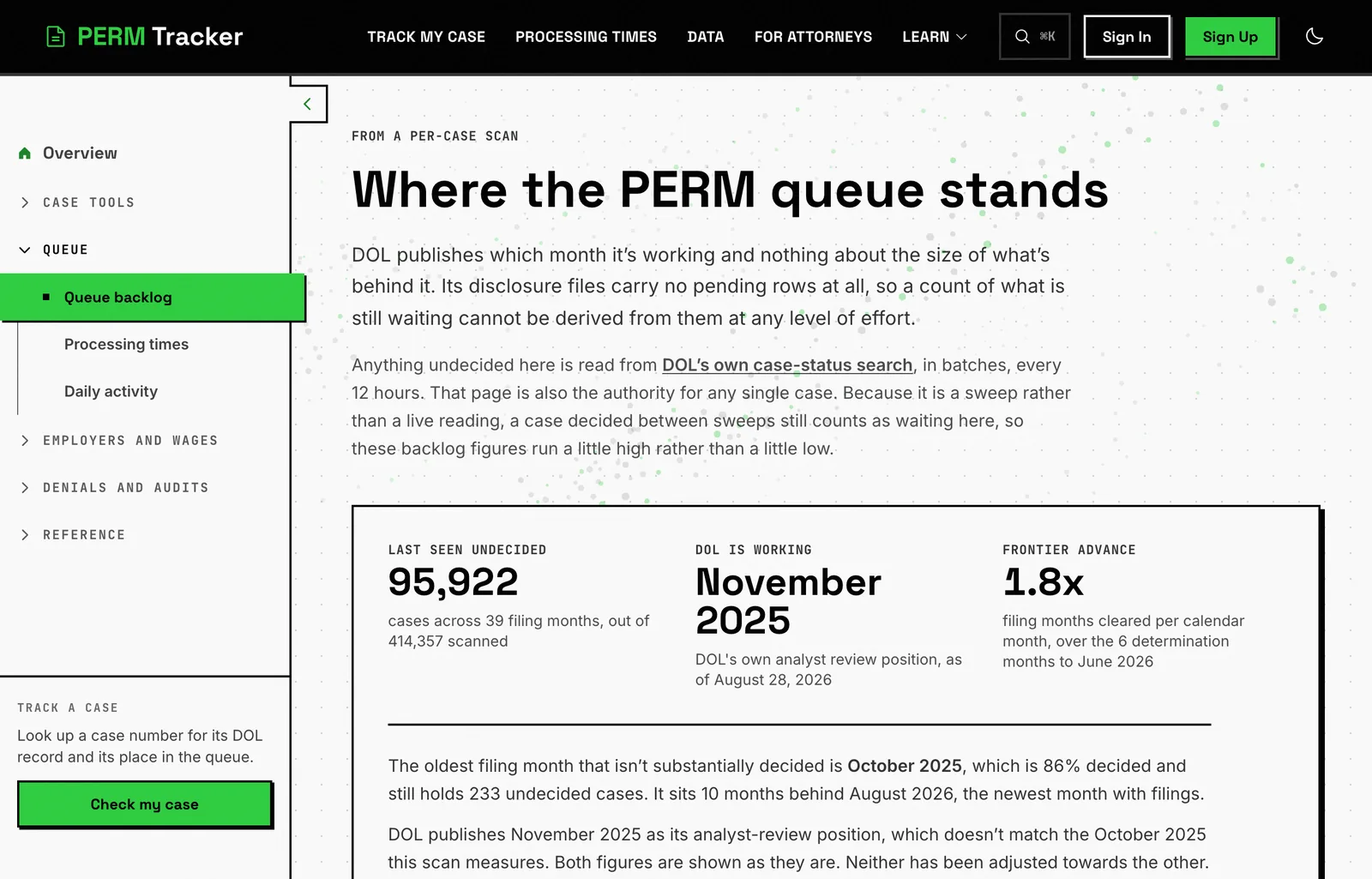
How long right now. DOL is reviewing applications filed in November 2025, as of its own figure from 28 August 2026. So the wait is running around nine to ten months for a case that goes straight through.
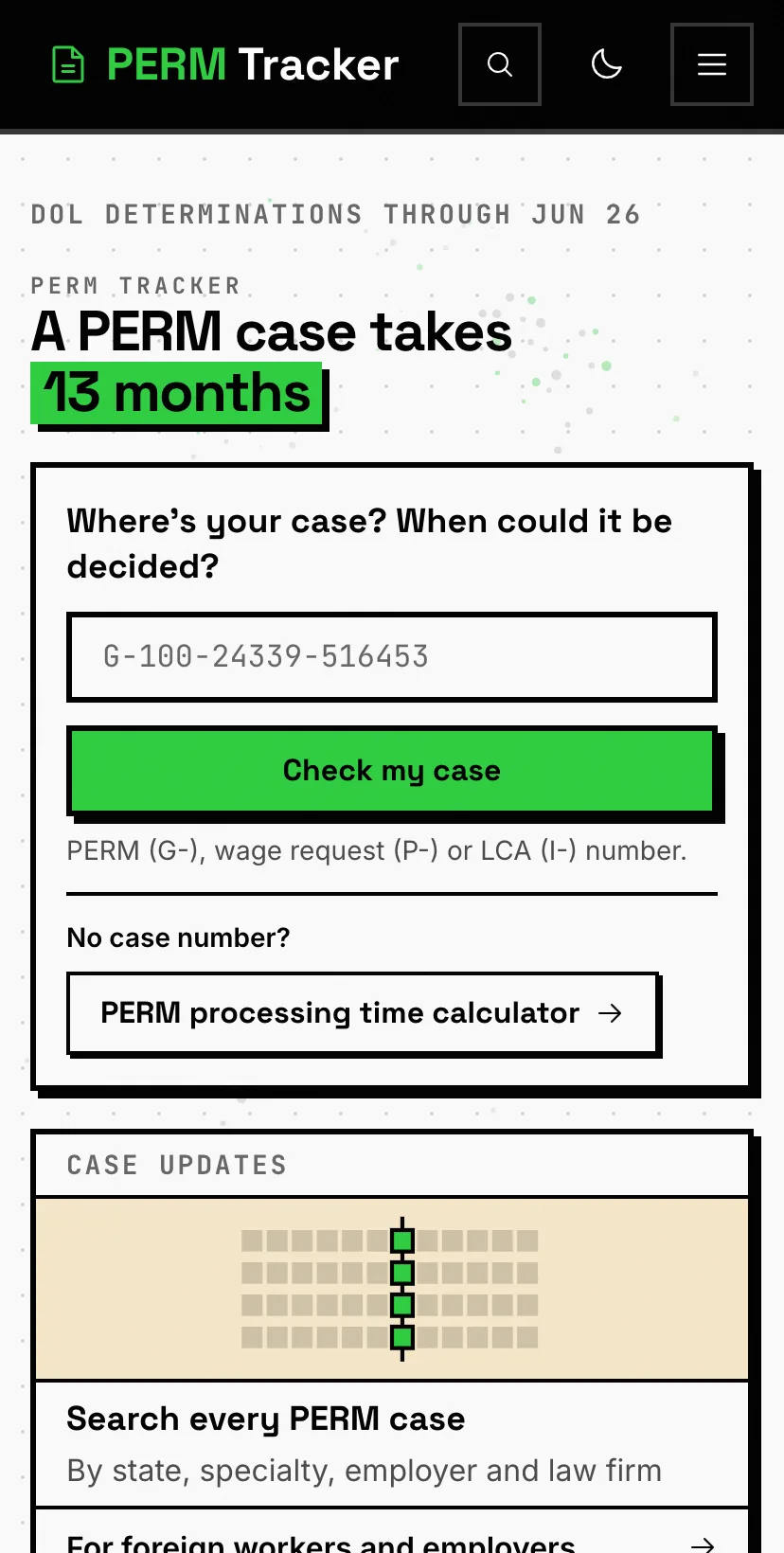
How to check yours. The case number starts with G-100- (older ones use an A- format). Put it into case status and you'll see DOL's own status word, what it means in plain English, and where your filing month sits in the queue.

You can also leave an email address and hear when the status changes, so you don't have to keep checking. It's one message per change, and no account is needed.
What the statuses mean. Most cases sit in analyst review the whole time. A few get pulled into audit, supervised recruitment, or a request for information. Those aren't denials, but they do add months. What each status means goes through them one by one.
What can go wrong. Denials happen, and the measured rates are published by factor rather than blended into one score, because the factors aren't independent and a single number would imply a precision the data doesn't support.
About estimates. Any date anyone gives you for your PERM is an estimate built on how fast DOL has been moving. Ours has a median error of around 50 days, and we say so on the page. Treat a predicted month as a rough centre, not a date to plan around.
Step four: the I-140
Once the PERM is certified, the employer has 180 days to file the I-140 petition with USCIS. Miss that window and the certification expires.
How long. Ordinary processing runs months and varies by service centre. Premium processing is 15 business days for an extra fee, and most employers use it.
How to check. This is USCIS, not DOL, so the tracking is different. You'll have a receipt number beginning with three letters. USCIS has its own case status tool. The I-140 queue tool shows how deep the queue is at each service centre.
What matters more than the timing. Your priority date is locked in when the PERM was filed, and it survives the I-140. That date is what governs everything after this point.
Step five: the wait for a visa number
This is where the process stops being about processing times and starts being about your country of birth.
Every year Congress sets a fixed number of employment green cards, with a per-country cap. If more people from one country apply than the cap allows, a queue forms and the State Department publishes a cutoff date each month. You can only file the final step once your priority date is earlier than that cutoff.
How to check. The priority date tool holds 84 months of cutoff history, so you can see not just where the line is but which way it's been moving. That direction matters more than the current number.

Two things worth knowing. Cutoffs move backwards sometimes, which is called retrogression and is genuinely demoralising when it happens. And "current" means there's no backlog for your category and country at all, which is the position most of the world is in and India and China largely are not.
What can go wrong. Nothing you can influence. This step is arithmetic on a quota.
Checking without asking anyone
A recurring frustration is that the person waiting has the least information. The employer's attorney has a portal login; you have whatever you're told.
That's less true than it used to be. DOL's own case status system answers to anyone holding a case number, pending cases included, across all three of its filings. So you can check the wage request, the PERM, and the H-1B labour condition application yourself, without a login and without waiting for someone to reply to an email.
If you don't have the number, ask whoever filed. It's an ordinary request and they have it on the receipt. Failing that, find it by employer.
What none of this can tell you
- When your case will actually be decided. Everything here is built on how fast DOL has moved recently. It has no view of your specific file.
- Why a decision went the way it did. DOL publishes outcomes, not reasoning.
- Anything about your employer's intentions. A filing is a legal step, not a promise about your job.
- Whether to make a life decision. Nobody should change jobs, buy a house, or leave the country on the strength of a queue estimate. That's a conversation with your attorney.
What's actually worth doing while you wait
Check monthly, not daily. Nothing changes between Tuesday and Wednesday, and an email alert removes the need to look at all.
Keep your own copies: the prevailing wage determination, the PERM certification, the I-140 approval notice. People change employers and lawyers, and documents go missing.
Know your priority date, and know your category. Those two facts determine more about your timeline than anything else on this page.
Ask your attorney the specific question rather than the general one. "Has the I-140 been filed, and do we have the receipt number" gets an answer. "How long will this take" does not.
Where to go next
Each step has its own detail:
- What each PERM status means and how to look one up
- How DOL sets a prevailing wage and how to track a request
- How the PERM queue works and where your month sits
- The deadlines that matter
- Why cases are denied or audited
- How the visa bulletin works
- Tracking a case without an account
- What to do while you wait