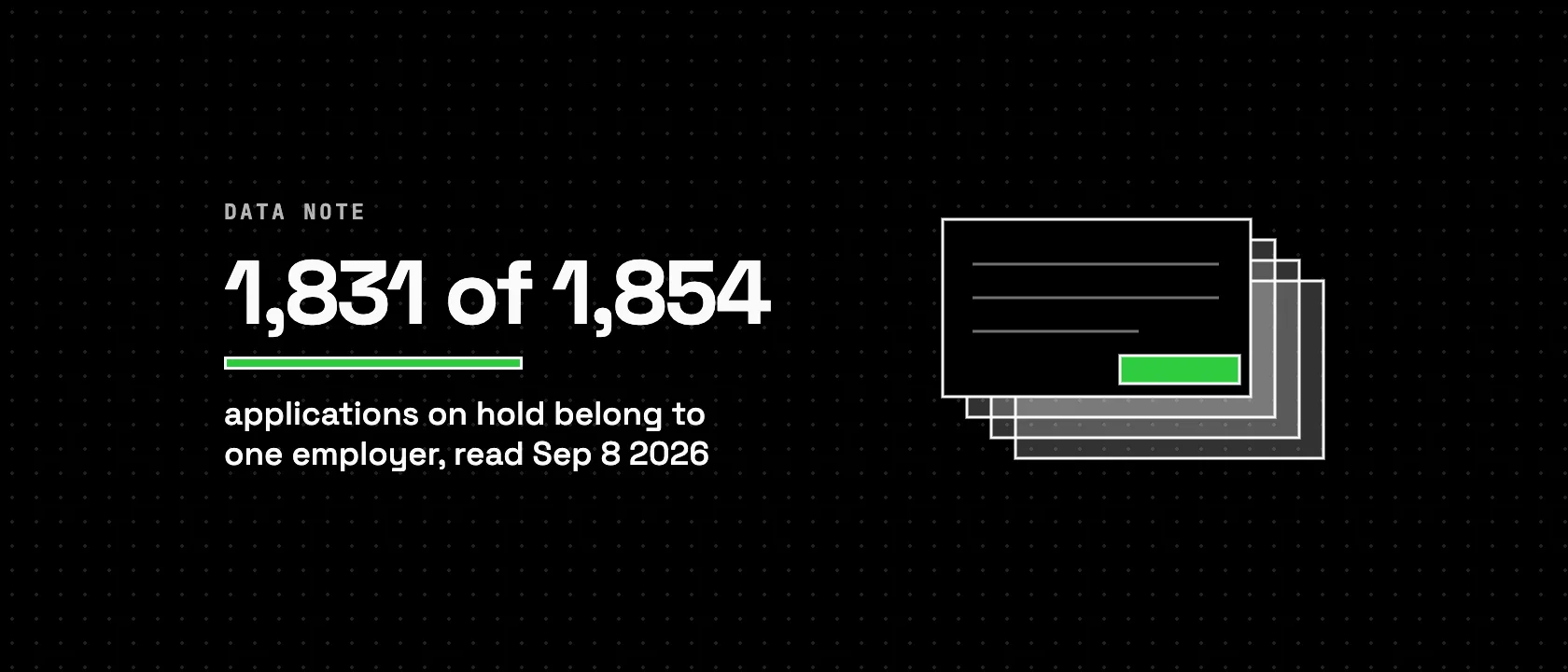
Most of a PERM wait is uneventful, and that's the normal case rather than a bad sign. An application sits in the Department of Labor's queue in filing order, and nothing happens to it until an analyst opens the file. DOL's own published average for that is 336 days, for the applications it decided in August 2026.
So the useful question isn't how to make it move. It's what's worth watching, what isn't worth the anxiety, and what actually deserves a phone call.
Nothing here is legal advice. Your attorney knows your case in a way a public dataset never will.
What's actually happening to a pending case
Almost all of them are in one place. Of roughly 95,900 PERM applications waiting at the start of September 2026, 90,127 were in ordinary analyst review, which DOL works in filing-month order. About six percent were somewhere else: an information request, an audit, a hold, or an appeal after an adverse determination.
DOL publishes which filing month it's reviewing and overwrites it, so its own page can never say how fast it's moving. On 28 August 2026 that position was November 2025.
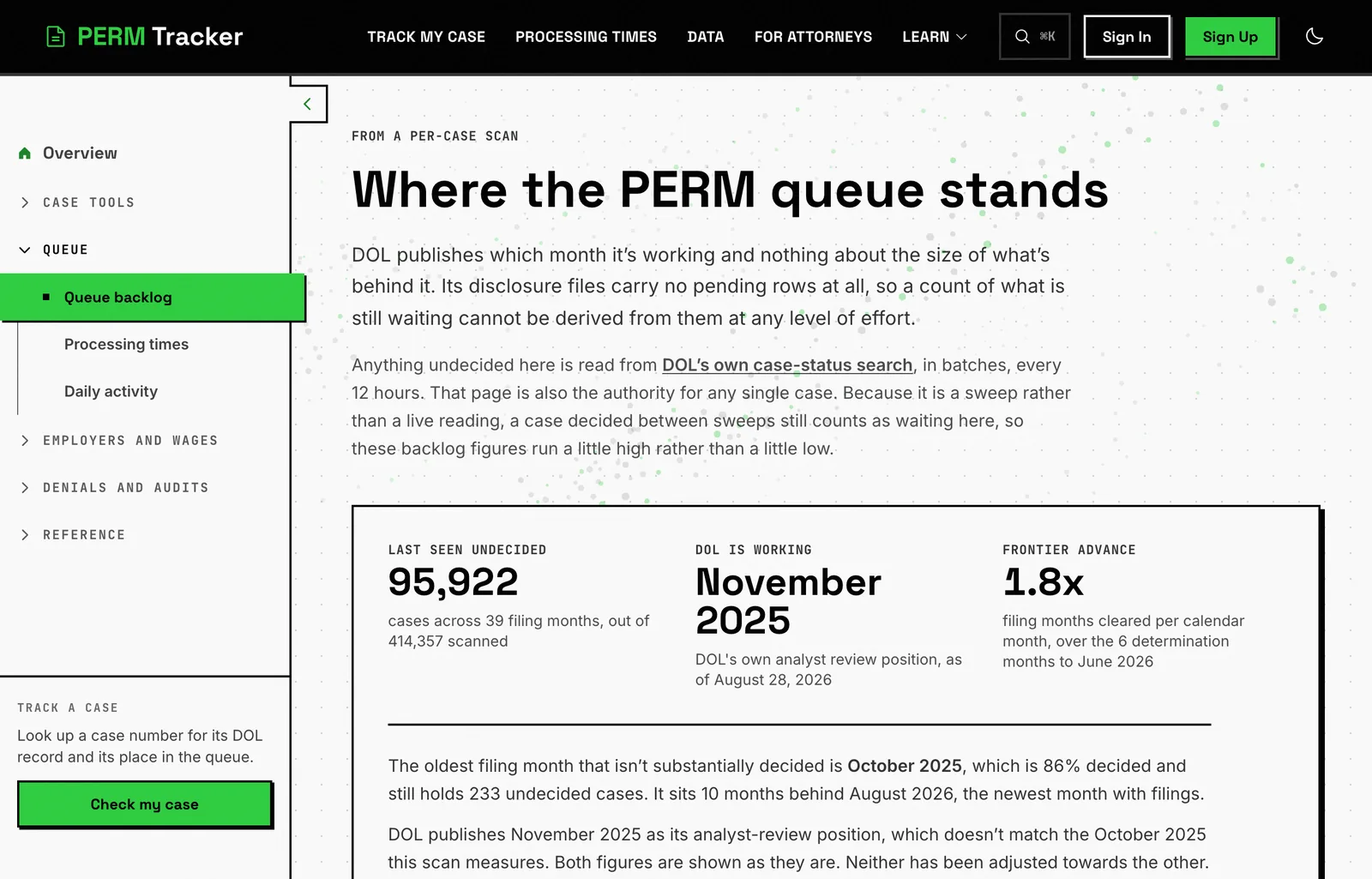
Two things follow from filing order. Your filing month is the single biggest thing about your wait, and it was fixed the day the application went in. And a case whose month DOL has already passed is worth a closer look, which is the last section here.
How often is it worth checking
Case records here are refreshed from DOL daily. Checking more often than that reads the same row twice.
Even daily is more than most cases justify. A case in ordinary analyst review typically shows the same status for months, then changes once.
| What you might check | Where | How often it can change |
|---|---|---|
| Your own case status | case status lookup | refreshed daily, but usually static for months |
| Which month DOL is reviewing | processing times | DOL republishes it roughly weekly |
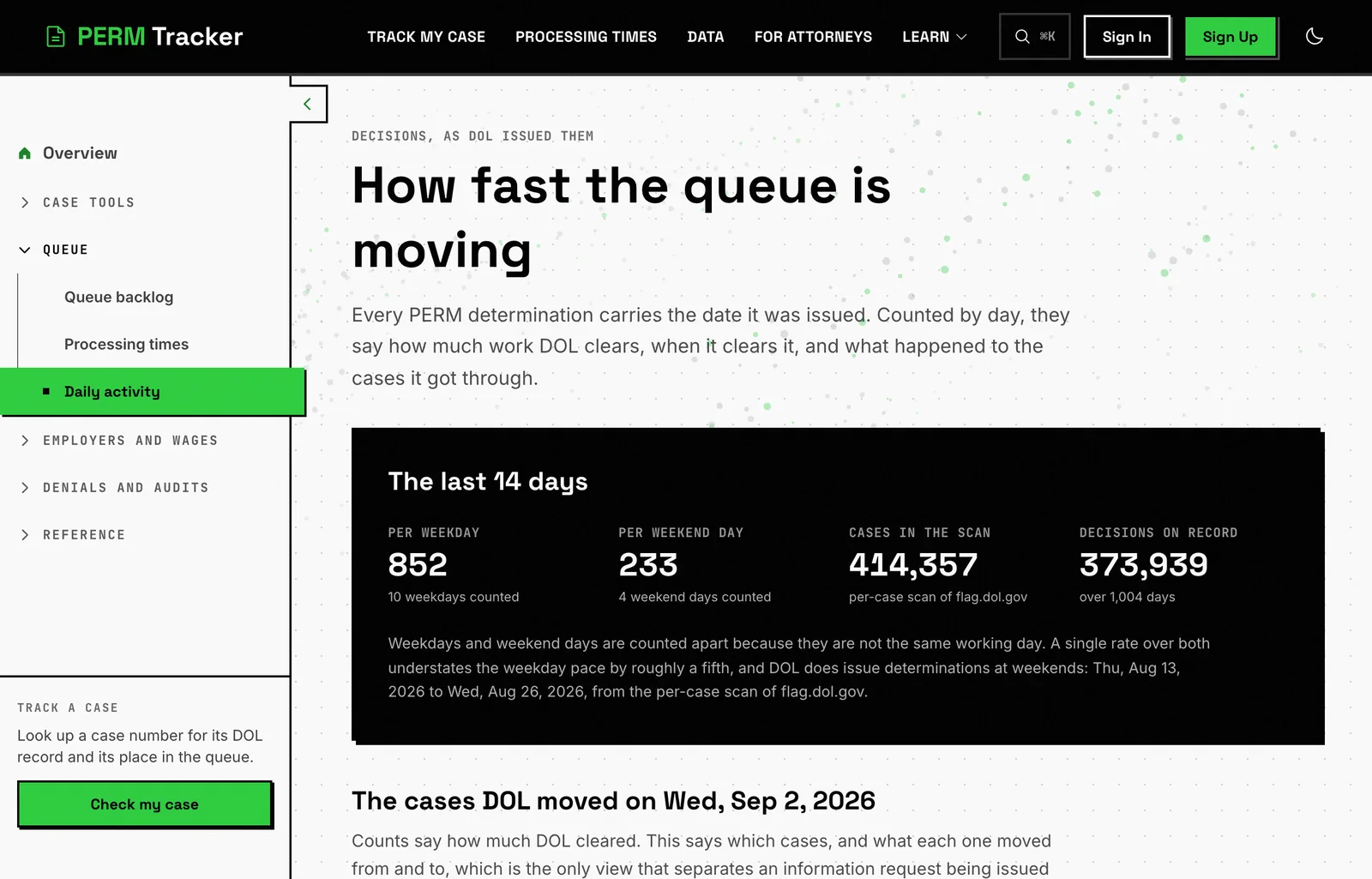
| What DOL decided today | decision activity | daily |
| Your priority date | priority date calculator | monthly, when the visa bulletin comes out |
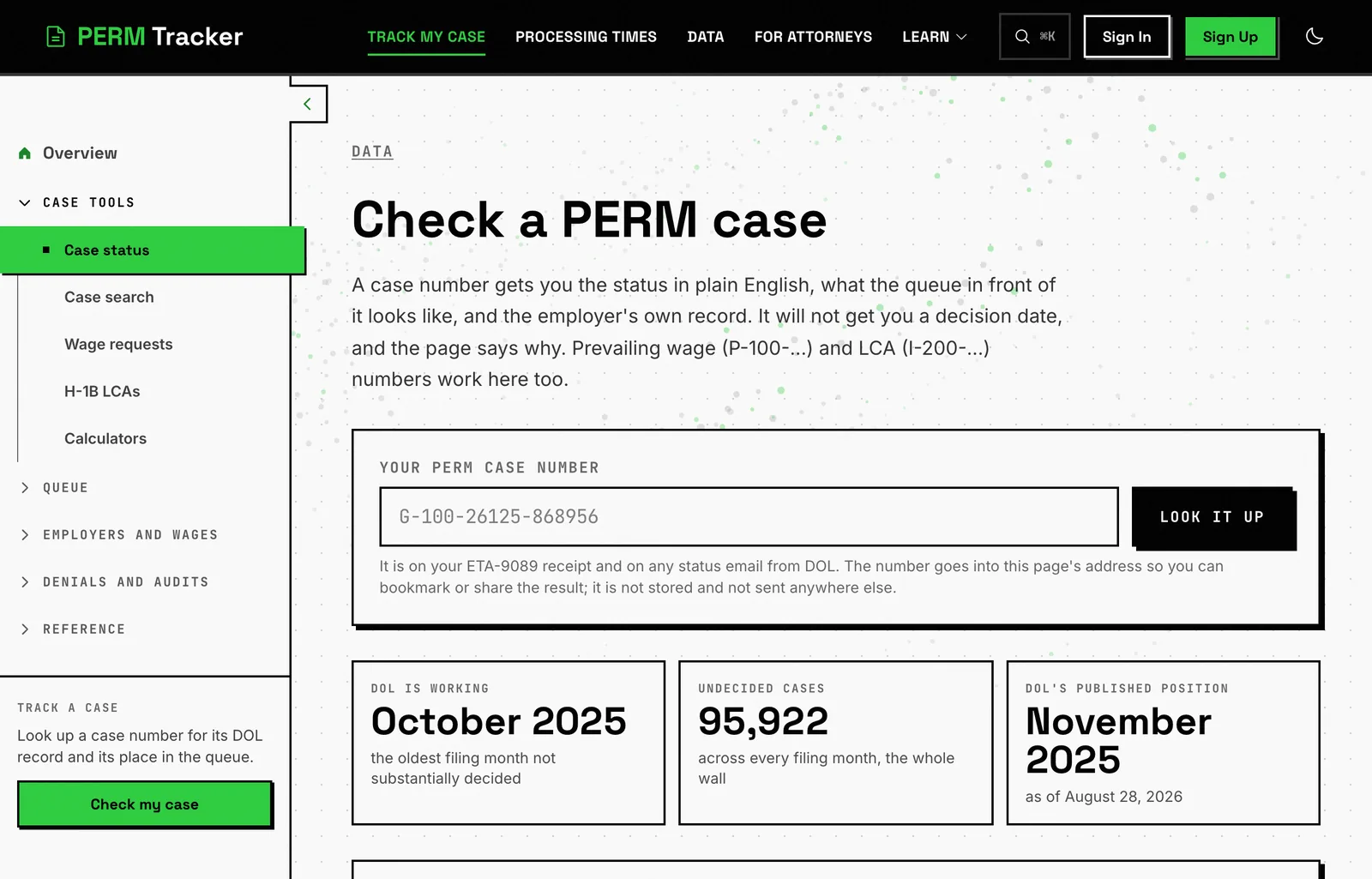
The better version of checking is not checking. Leave an email address on the case and get one message when DOL's status changes, then nothing. It's double opt-in, one email per change, and no account is needed. The same works for a prevailing wage request or an H-1B labor condition application if you're waiting on one of those first.
What's out of your hands, and worth accepting early
- Your place in the queue. It's set by filing month. Nothing you or your employer does after filing changes it.
- Your employer's first letter. Within a filing month DOL works alphabetically, so this is real. It's also small. Measured across 339,518 decided cases, the whole alphabet is worth about 27 days end to end, and in 6 of 30 filing months the back half was decided faster than the front. Every public estimator uses this term. Few of them say how little it's worth.
- DOL's pace. Over the six determination months to June 2026, DOL cleared 1.8 months of filing queue per calendar month. Across the whole record that rate has run between 0.33 and 2.50. It's a description of the past, not a rate to plan on.
- Whether you get an audit. Audit selection includes a random component. There is no version of waiting well that avoids it.
There's no expedite path for an ordinary PERM, no queue position to check within a month, and no benefit to filing anything unprompted.
What to ask your employer or attorney, and when
Most of this is administrative and worth doing once, early, in writing.
| When | What to ask |
|---|---|
| At filing | The case number, in writing. Without it you can't check anything yourself. |
| At filing | The prevailing wage determination date, and when it expires. |
| If the filing slipped | Whether the recruitment is still inside its validity window. |
| If a status changes | What DOL asked for, what the response deadline is, and who is drafting it. |
| Once certified | The date the certification was issued, and the plan for the I-140. |
| Before anything changes | A promotion, a title change, a worksite move, or a layoff round. Tell them early, not after. |
The response deadlines DOL sets on an information request or an audit are short and firm, and a missed one is far more damaging than a slow queue. That's the one place where the answer to "should I follow up?" is yes, immediately.
The deadline calculator works the dates out from the determination date if you want to check the arithmetic yourself.
What genuinely signals a problem
Three things, roughly in order of how much they matter.
The status leaves analyst review. RFI issued, application on hold, supervised recruitment, or an audit means a human has the file and wants something. It's not a denial, and it isn't rare enough to panic about: 1,091 cases were sitting at an open RFI in late August 2026. The median case at one had been filed 356 days earlier, which is about when a file first gets opened. What matters is that somebody responds on time.
DOL passed your month and your case still shows analyst review. This is worth an email. One honest caveat: the ordinary queue isn't re-read as often as the smaller review stages, so a case that moved recently may still be shown in the queue it was last seen in. Look at the date on the record before drawing a conclusion.
A deadline on your employer's side that nobody is watching. The wage determination expires. The recruitment has a validity window. After certification there's a fixed window to file the I-140, and letting it lapse wastes the entire wait. These are the failures that are actually preventable, and none of them are about the queue.
The RFI and audit page shows how many cases are at each stage and how long they've been there, if you want the scale rather than the anecdote.
What this can't tell you
- A date. The estimates here carry a median error of about 50 days, and that's when the model is behaving. Any site giving you a confident day is selling confidence.
- Your position within a filing month. DOL doesn't publish one. Nobody has it.
- Why a case was held, audited or denied. DOL publishes the status word, not its reasoning.
- What your employer intends. A filed PERM is a legal step, not a commitment to file the I-140 that follows it.
- Anything about your USCIS stages. The I-140 and I-485 are a different agency with a different record, and a PERM case number says nothing about them.
Related
- What each PERM status means, for the strings DOL prints with no glossary
- Where your filing month sits, for placing yourself in the queue
- Denial and audit rates, published as measured rates and deliberately not blended into one score