A sponsor that filed forty PERMs last year and none this quarter is visible in DOL's record, and so is the difference between a real stop and a spelling change. This guide is about reading that record honestly: what a gap in filings means, what it doesn't, and where the data runs out.
Find the employer's record
Open the employer's page
Search the name on the employer index. The page shows every PERM DOL has published for that employer, by month, with certification and denial counts, plus the cases still pending in DOL's live index.
Check the spellings
DOL prints one company under several names: a comma, an "Inc" against an "Inc.", a division against the parent. The page merges the spellings it can and lists the ones it merged under "also filed as". If the recent filings are under a name the merge didn't catch, they'll be on a sibling page, and the search will find it.
Read the two halves separately
The published half is DOL's quarterly file and ends at the last quarter DOL released. The live half is what DOL's index shows today, including cases filed since. A "stop" that's only in the published half may just be the quarter DOL hasn't published yet.
The ordinary reasons a filer goes quiet
- The quarterly lag. DOL publishes decided cases up to three months after the quarter ends, and nothing about pending ones. The live half of the employer page is the only place a filing from last month shows. If it's there, the employer didn't stop.
- A new law firm. The record's law-firm column changes and the filings continue under the new firm. The law firm page shows the same employer under each firm that filed for it.
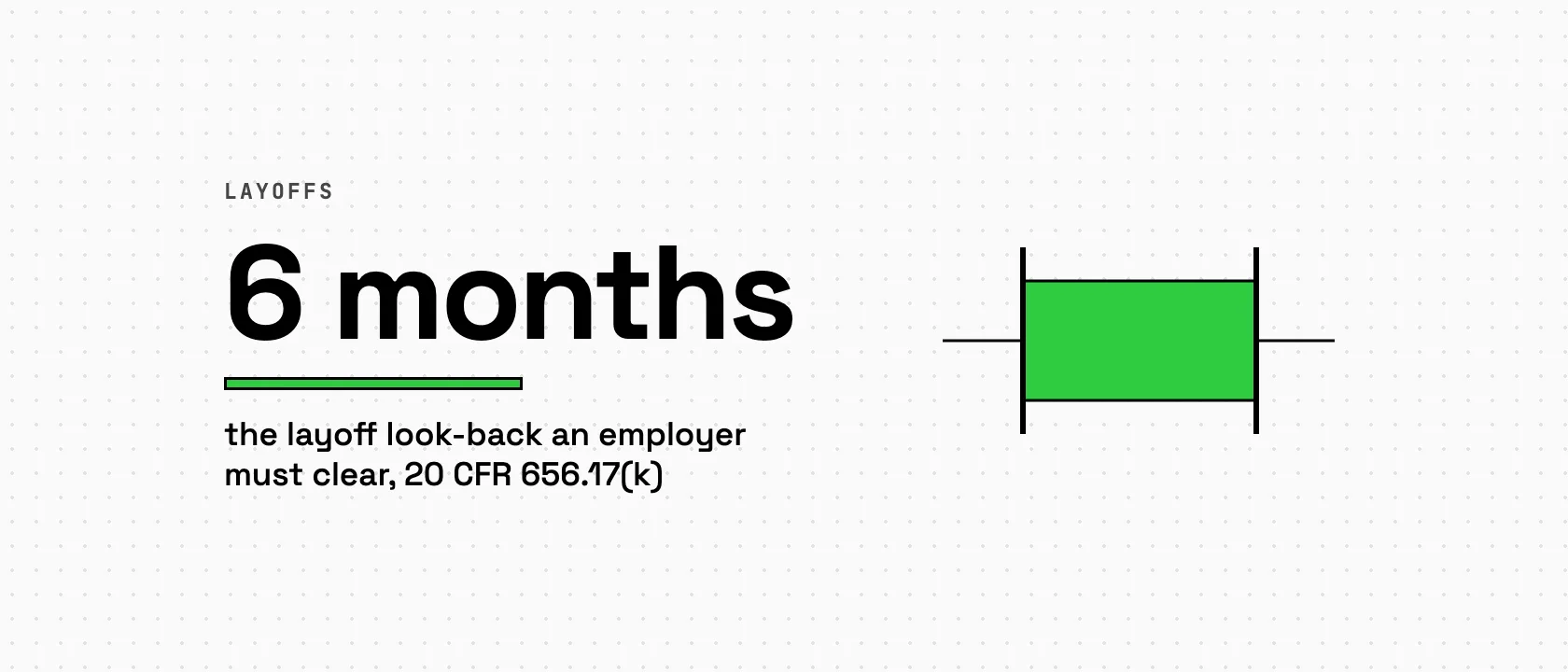
- A hiring freeze or a layoff. A layoff in the area and occupation inside six months of filing adds an obligation under 20 CFR 656.17(k), and some employers pause filings rather than carry it. Layoffs and your PERM covers the rules.
- A policy change. Some employers stopped after the 2024 prevailing wage and filing-fee changes; others switched categories. The policy feed lists the rules that changed and when.
- A debarment. Rare, and public: DOL's debarment list bars an employer from the program for a period. The debarments page is read from DOL's own list, and an employer page carries a notice while the bar runs.
What a freeze means for a case already filed
Nothing, by itself. A PERM in the queue is decided on its own record, in filing order, and DOL doesn't look at whether the employer filed anything since. The queue page shows where the filing month sits.
What can change is the job offer behind the case. A PERM is an offer of a specific job, and an employer that eliminates the position withdraws the application. So the question to ask isn't "is the company still filing" but "is my job still open", and the employer's own HR is the only source for that.
An approved I-140 is a different matter, and a better one: after 180 days the employer's withdrawal no longer revokes it, and the priority date is retained for a later petition regardless. The retention calculator puts dates on both rules.
What the record can't tell you
- Why. DOL records filings and decisions, not intentions. A gap is a gap; the reason is the employer's.
- Whether it's permanent. A quarter with no filings is common for a small sponsor whose whole history is a handful of cases. The page prints the count of filings so a single quiet quarter can be read against it.
- Anything about a company that files under a different legal entity. A subsidiary's cases sit under the subsidiary. The employer page merges spellings, not corporate structures, because merging two genuinely different companies would be worse than leaving them apart.
Related
- Look up a sponsor, the walkthrough of the employer page
- Employers under review, which sponsors hold unusual shares of pending cases at RFI, on hold or in appeal
- Every case status, explained