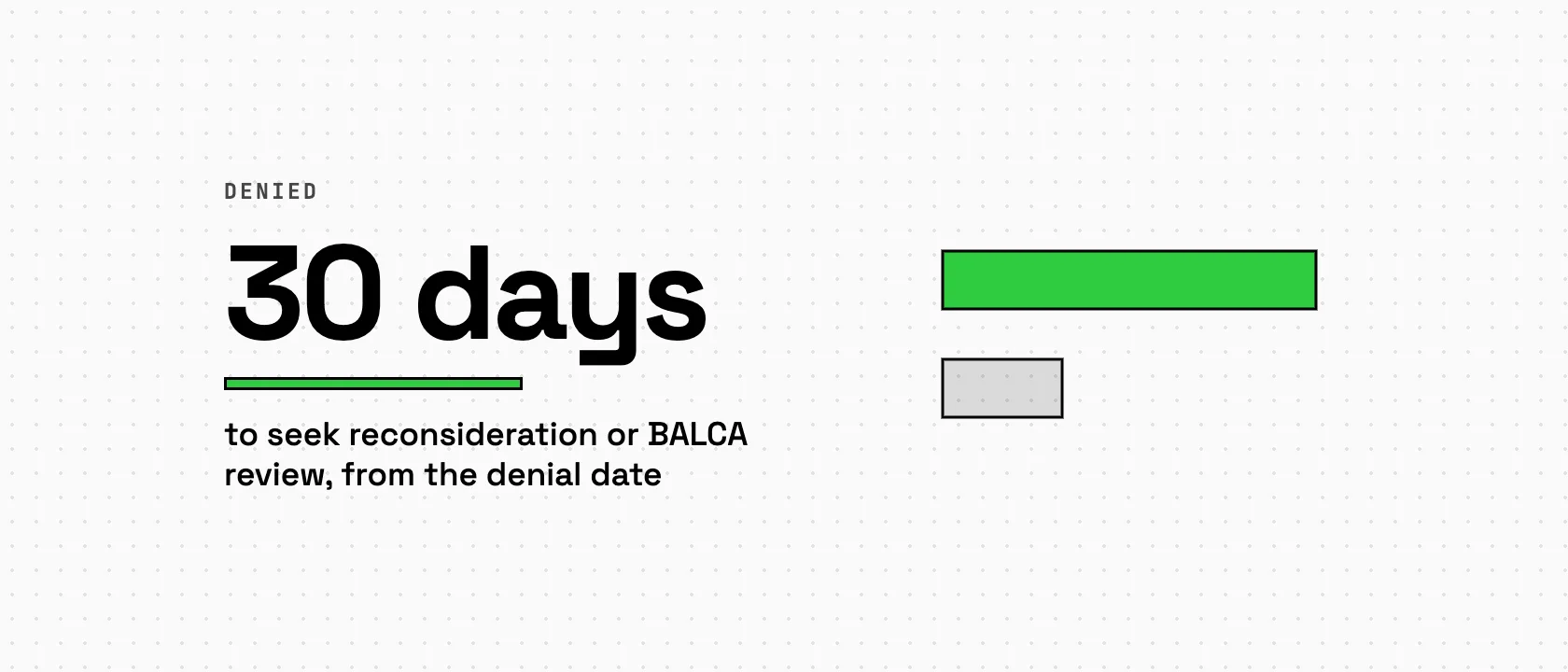
The denial letter states the grounds, and from the date on it two 30-day windows run at once. One asks the same officer to look again. The other puts the denial in front of a judge. Letting both pass has a cost beyond this application, and that's the part most people find out too late.
🚨 The two windows start on the date the denial was issued
Not the day it arrived. 20 CFR 656.24(g) for reconsideration and 20 CFR 656.26(a) for a request for review both count 30 days from the determination date.
The three routes
Reconsideration is narrow on purpose. It can only rely on documents DOL already received, or documents the employer had no earlier chance to submit that existed when the application was filed and were kept on file. It isn't available at all where the denial came from disregarding a system prompt or a direct instruction, under 656.24(g)(3). The officer can reconsider, or treat the request as a request for review and forward it to the Board.
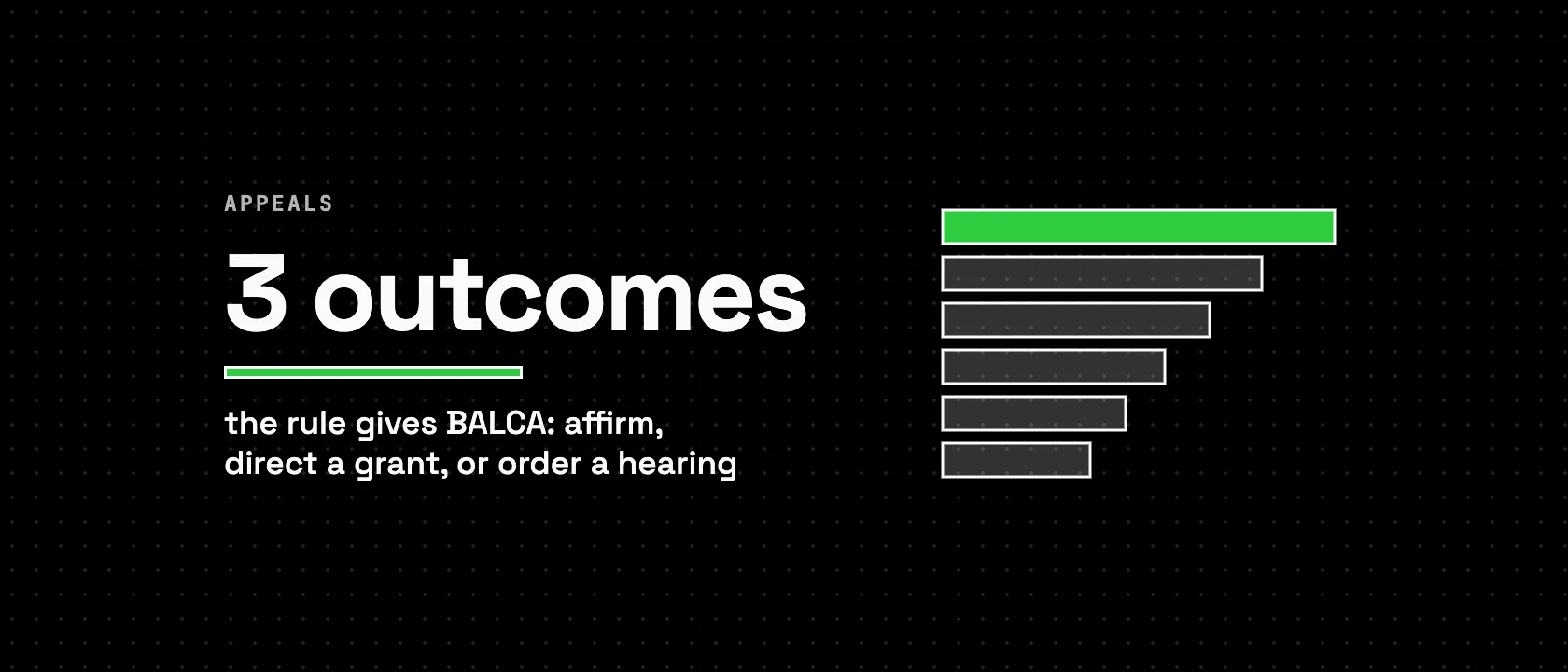
A request for review goes to the same officer, who forwards the file to BALCA. The Board reviews on the record: the evidence is what was already in front of the officer, and the submissions are argument. Under 656.27(c) it can affirm the denial, direct the officer to grant the certification, or order a hearing. Those three, and nothing else; "remand" is what everybody assumes and isn't what the section says.
What missing both windows costs
Under 656.24(e) and 656.26, letting both windows pass counts as a failure to exhaust administrative remedies, and the denial becomes the final determination of the Secretary. That forecloses a federal court looking at it later. So the decision not to appeal is itself a decision, and it has a date.
Refiling instead
An employer can file a new application at any time. What the denial changes is the recruitment: the steps behind a PERM have to be less than 180 days old at filing, under 656.17(e), so a refile after a long wait usually means advertising again. The new case gets a new case number, a new filing date and a new priority date, and goes to the back of the ordinary queue.
Refiling is the common choice when the denial names a fixable defect on the form. An appeal is the choice when the officer's reading of the regulation is the thing in dispute, because a refile with the same facts gets the same reading.
What the record shows
| Measured, as of September 8, 2026 | |
|---|---|
| Cases at RECONSIDERATION APPEALS | 2,351 |
| Median time since filing for a case sitting there | 522 days |
| Cases at BALCA APPEALS | 362 |
| Median time since filing for a case sitting there | 711 days |
Those are ages, not durations: a case at BALCA has usually spent a year in the ordinary queue before the denial, then months in reconsideration, then the Board's own queue. The stage pages under RFI and audits list the cases at each one, oldest filing first.
What a denial doesn't touch
- The prevailing wage determination, while it's still valid. The validity calculator gives the date.
- An approved I-140 from an earlier PERM. Its priority date is retained under 8 CFR 204.5(e), and the retention calculator walks the rules.
- H-1B status. A PERM denial changes nothing about the six-year limit by itself; the 365-day rule depends on a PERM or I-140 being on file, and a denied one no longer is.
What this guide can't tell you
- Whether your denial is worth appealing. That's a reading of the grounds against the record, which is the attorney's job.
- How long BALCA will take on your case. The Board publishes no processing time; the median age above is the only measured figure.
- The denial rate for your employer or occupation as a prediction. The measured rates are on the denial risk page, with the reasons they aren't a score.